
How we're shaping tomorrow together - announcing our funded projects for 2026/27
When researchers, communities, businesses, policymakers and practitioners come together, big changes can happen. Sometimes, all that is needed is the opportunity to turn an idea into action. Shape Tomorrow Together is designed to do exactly that.
Shape Tomorrow Together is our flagship live co-production programme. Through a series of coaching-led workshops, participants come together to develop ideas, build partnerships and explore solutions to some of society's most pressing challenges. The programme culminates in the opportunity to pitch for funding, helping participants take the first steps towards turning their ideas into reality.
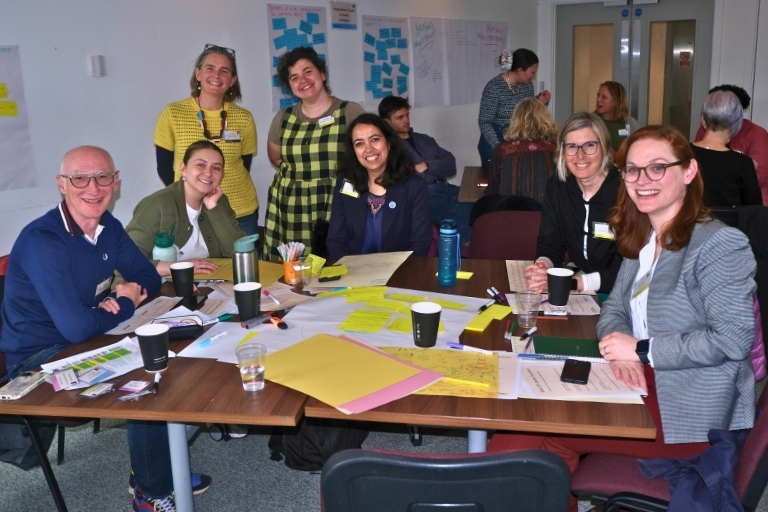
A working group at Shape Tomorrow Together
Throughout the programme, people from councils, community groups, charities, industry and academia work together across sectors, disciplines and lived experiences to explore key societal challenges and think ambitiously about projects that could make a real difference. The process then supports teams to turn these big ideas into practical first steps, creating the foundations for meaningful impact.
Following the project pitches, several teams were awarded funding to bring their ideas to life. These projects demonstrate the power of collaboration and community-led action in addressing the complex challenges our future society faces.
Meet the teams and discover more about the projects helping to Shape Tomorrow Together below.
| Lead applicant | Andrea Cowans |
| School/Organisation | Luminate Education Group |
| Challenge area | Polarisation, Trust and Social Cohesion |
| Project Title | Building belonging and conflict resolution in Further Education and community organisations through youth leadership |
| Every young person deserves to feel they belong. So how can we make sure this happens? By developing and testing a peer-led ambassador network using restorative practices, this project aims to build belonging, strengthen relationships and create more cohesive communities. Because when young people feel connected, they're more likely to engage in education, training and community life.
|
|
| Lead applicant | Eilidh Noyes |
| School/Organisation | Psychology, Medicine and Health |
| Project Title: | Can we believe what we see? |
| Challenge area | Ethical AI and responsible digital societies |
| Can you trust an advert when AI made it? As AI-generated advertising becomes harder to spot, this project explores whether knowing an advert was created by AI changes how young adults feel about it. Through focus groups and behavioural experiments, we'll investigate how AI labelling affects trust, confidence and buying decisions, helping shape more responsible industry practice and future AI policy.
|
|
| Lead applicant | Khadijah Ibrahim |
| School/Organisation | Poet, Writer, Literary Activist, Leeds Young Authors |
| Project Title: | Textile and Text: Woven Words Shared Histories and Creative Futures |
| Challenge area | Migration, mobility and belonging |
| Every piece of cloth has a story stitched into it. From Scottish Tartan and Ghanaian Kente to Kenyan Maasai Shuka and Indian Madras, this project invites young people to explore the histories, identities and experiences woven into textiles. Through making, storytelling and poetry, participants will build creative confidence while discovering new perspectives on culture and belonging.
|
|
| Lead applicant | Kelly Cumberland |
| School/Organisation | Artist |
| Project Title: | Interdisciplinary Labs for Hidden Inequalities (InterLabs): Creative Co-Production for Inclusive Health Research in Leeds |
| Challenge area | Addressing health inequalities |
| Health research shapes our lives. So why do so many people feel excluded from it? InterLabs brings artists, researchers and communities together to explore lived experiences, challenge barriers to participation and reimagine how research is done, developing new approaches that will make health research more inclusive, trusted and accessible.
|
|
| Lead applicant | Keziah Berelson |
| School/Organisation | Mafwa Theatre |
| Project Title: | Refugee Week as Civic Advocacy |
| Challenge area | Migration, mobility and belonging |
| What does a City of Sanctuary look like in practice? Building on Leeds' commitment to welcoming and inclusion, this project brings together refugee communities, cultural organisations and civic partners to shape a shared vision for Refugee Week 2027. Together, they'll create a more visible, coordinated and city-wide celebration of belonging, solidarity and community.
|
|
| Lead applicant | Sharon Prince |
| School/Organisation | Synergi Leeds Partnership |
| Project Title: | Black Voices in the city |
| Challenge area | Addressing health inequalities |
| Everyone deserves mental health support that understands their experiences. Yet Black communities continue to face inequalities in support and limited opportunities to influence the services designed for them. This project will create Leeds' first community-led Black Mental Health Advocacy Framework, ensuring Black voices help shape policy, improve services and drive change.
|
|
| Lead applicant | Marketa Dolezalova |
| School/Organisation | SSP, ESS |
| Project Title: | Enabling Agency: International recruits in the care sector |
| Challenge area | Migration, mobility and belonging |
| People who come to the UK to care for others shouldn't have to face exploitation themselves. Yet many internationally recruited care workers continue to experience financial hardship, insecure employment and unfair treatment. This project will establish the UK's first lived experience forum for migrant care workers, ensuring their voices help shape policy, evaluate government responses and strengthen protections across the sector.
|
|
| Lead applicant | Melissa Kirby |
| School/Organisation | Medicine, Medicine & Health |
| Project Title: | Capacity Conversations |
| Challenge area | Addressing health inequalities |
| Decisions about your life shouldn't happen without your voice. Yet many people with learning disabilities are assessed for mental capacity without fully understanding what that means. This project will co-design and test a Capacity Conversations Toolkit that supports clearer, more meaningful discussions about capacity, helping people feel more informed and involved in decisions about their lives. | |