
Ethical Tinkering: Power Dynamics, Ethical Dilemmas, and Co-Production in Urban Planning
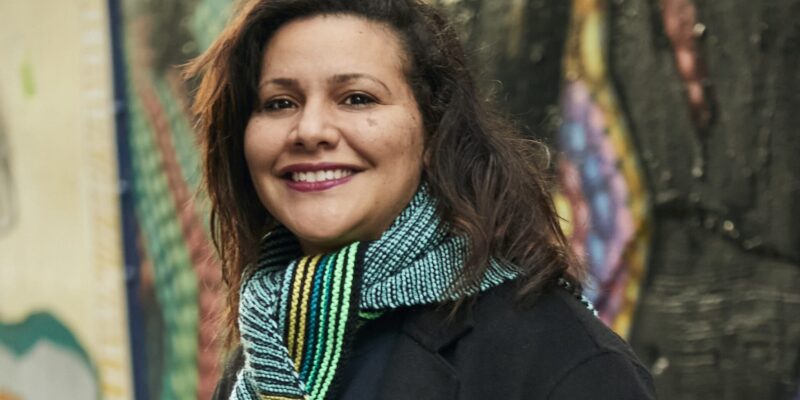
Co-production Blog - prepared by Insaf Ben Othmane Hamrouni, Founder and Executive Director of Œcumene Spaces for Dignity
Urban planning in the so-called Global South [1] presents a complex and layered intersection of historical, cultural, and political dynamics. The colonial legacies that have shaped urban landscapes continue to cast long shadows, reinforced by neoliberal mechanisms that prioritise market-driven solutions over social justice. These systems often result in technocratic, top-down approaches that marginalise local communities and ignore their nuanced social, cultural, and environmental assets. In this context, the profession of urban planning faces critical questions: how can we design for local contexts without replicating globalised paradigms of development? How can we dismantle colonial and neoliberal structures while fostering inclusive urban futures?
The Foundations of Ethical Tinkering
Central to these questions is the intricate web of power dynamics inherent in urban planning. Urban planners, as experts, are endowed with significant authority to shape the built environment. However, this authority is rarely neutral. It operates within frameworks of power that often reflect entrenched inequalities. This imbalance raises profound ethical dilemmas. Planners are not only technical specialists but also mediators of social values and priorities. They must navigate tensions between professional expertise, institutional mandates, and the diverse needs and aspirations of communities. These tensions underscore the pressing need for a reflexive practice—one that acknowledges the ways in which power dynamics influence decisions and outcomes.
The Ethical Framework: A Prerequisite for Co-Production
Ethical considerations in urban planning are not merely abstract ideals but practical imperatives. Planning decisions carry profound social, economic, and environmental consequences. They can either perpetuate systemic injustices or serve as instruments of equity and empowerment. This ethical responsibility becomes even more critical in contexts marked by historical exploitation and contemporary inequalities. It calls for a robust ethical framework—one that interrogates the assumptions underpinning planning practices and situates them within broader struggles for justice and sustainability.
The concept of co-production offers a compelling alternative to conventional planning paradigms. Co-production emphasises collaboration among diverse stakeholders, fostering shared ownership of urban futures. Yet, it is not a panacea. Effective co-production requires meticulous preparation, rooted in a strong ethical framework and cultural practices that support participatory engagement. This is not simply a methodological adjustment but a deeper transformation of the norms, behaviours, and structures that govern urban planning. Co-production, when authentically implemented, becomes a "ping-pong" of ideas — a dynamic interplay between experts and communities, where the goal is not to impose solutions but to uncover them collectively.
Co-Production and the Question of Expertise
Co-production challenges the traditional hierarchies of expertise, raising questions about the role of the planner in contexts where social orders are not strictly pyramidal but more tribal, relational, and fluid. In such contexts, expertise must shift from being a directive force to a facilitative one. This requires planners to recognise and value local knowledge, seeing urban production not as a binary between professional and communal input but as a hybrid, a duality, or even a shared action that blurs conventional boundaries.
The legacy of colonialism and the pressures of neoliberalism complicate this shift. How can planners work locally without undermining existing social assets or replicating the extractive patterns of the past? The answers are far from clear, and this ambiguity underscores a profound existential question for the profession: what is the role of expertise in a world where power is no longer unidirectional but dispersed, and where social order resists homogenisation?
Designing for the Local: A Reimagined Urban Practice
To design effectively for local contexts, planners must engage deeply with the specificities of place. This means moving beyond universalised models of urban development to embrace approaches that are attuned to the cultural, social, and ecological realities of each context. Such a practice requires not only technical knowledge but also an ethical and cultural sensibility—a recognition that urban spaces are not merely sites of production but arenas of lived experience and collective identity.
This localised approach also involves addressing the legacies of colonialism and neoliberalism. These systems have often commodified urban spaces, turning them into sites of profit rather than belonging. Repairing this damage involves re-centering the social, ensuring that urban planning strengthens rather than erodes community assets. It is a process of ethical tinkering, one that experiments, learns, and adapts while remaining firmly rooted in the principles of justice and equity.
Toward a Non-Pyramidal Social Order in Urban Planning
Urban planning in the Global South invites a rethinking of its foundational assumptions, particularly those related to social order and governance. The pyramidal structures of authority that have long defined planning practices are increasingly being called into question. In their place, more relational and networked forms of governance are emerging—forms that align with tribal or communal models of social organisation. These models emphasise shared responsibility, mutual accountability, and a commitment to the common good.
Such a shift does not diminish the role of expertise but reframes it within a collaborative ethos. Planners become co-creators, working alongside communities to imagine and realise urban futures that are equitable, sustainable, and locally resonant. This collaborative process demands humility, flexibility, and a willingness to embrace the uncertainties and contradictions inherent in urban life.
A Call for Reflexivity and Transformation
The challenges of urban planning in the Global South are deeply intertwined with questions of power, ethics, and collaboration. Addressing these challenges requires more than technical solutions; it demands a fundamental transformation in the way planners think, act, and engage with the world. Power dynamics must be acknowledged and confronted, ethical dilemmas must be critically examined, and co-production must be grounded in preparation and cultural awareness.
At its core, urban planning must evolve from a profession defined by control and authority to one characterised by dialogue and shared action. This transformation involves not only rethinking the tools and methods of planning but also reimagining the role of the planner in a world where social order is no longer hierarchical but collaborative and interconnected.
[1] The term "Global South" is used in academic and policy contexts to describe regions in Africa, Latin America, Asia, and Oceania, often as an alternative to terms like "Third World." While it highlights global inequalities, the term is criticized for oversimplifying diverse realities and perpetuating colonial-era binaries. Despite these limitations, it remains a useful framework for addressing power dynamics and systemic inequities in global development.
If you are a member of staff at the University of Leeds, or an external partner who works with us, and would like to write a blog on your experiences of co-production, please contact [email protected] to discuss your idea. Please join the Co-production Network, which is hosted on the Engaged Research MS Team (University of Leeds staff only).